Public Administration Program
Program Information
Type of Notification Revised program (revised according to the scheduled revision cycle)
Number of Degrees Revised program, 1 degree
Assessment Criteria Used 2022
Date of University Council Approval 27/03/2023
Academic Year Approved by the University Council for Offering 2023
Program under the Faculty of Social Sciences, Mahamakut Buddhist University, Isan Campus
In use since 2018
1.1.1 Name in Thai : Bachelor of Public Administration Program in Public Administration
1.1.2 Name in English : Bachelor of Public Administration Program in Public Administration
1.1.3 Teaching Location : Other teaching location (please specify): Mahamakut Buddhist University, Isan Campus
Program Structure
1.3.3 Language of Instruction: The program is taught in Thai.
1.3.4 Admission : Both Thai and international students are admitted
1.3.5 Collaboration with Other Institutions: This is the institution’s own program.
1.3.6 Degree Conferred upon Graduates: A single-major degree is awarded.
Program Learning Outcomes (PLOs)
PLO 1 Demonstrate broad knowledge of modern disciplines, concepts, and theories of strong citizenship; show eagerness to learn and inquire; and integrate various disciplines to develop society or solve social problems responsibly
Sub PLO 1.1 Explain modern concepts and theories, as well as the attributes of strong citizenship, that can be applied to develop oneself and keep pace with social change.
Sub PLO 1.2 Apply disciplines, concepts, and modern theories to develop oneself into a valuable citizen of society with a volunteer spirit and a sense of social responsibility.
Sub PLO 1.3 Analyze principles for integrating various disciplines to solve problems in life, family, and society appropriately, in line with the situation, and responsibly.
PLO 2 Be knowledgeable in language and technology for everyday communication that is correct,appropriate, and responsible
Sub PLO 2.1 Explain the use of Thai and English for basic everyday communication.
Sub PLO 2.2 Use Thai and English correctly for everyday communication, appropriately for real situations, demonstrating curiosity, eagerness to learn, and lifelong learning.
Sub PLO 2.3 Select and use communication and information technology tools correctly and appropriately for their intended purpose, with regard to social responsibility.
PLO 3 Be knowledgeable in Buddhist teachings and apply them in daily life to develop oneself and society in line with the principle of Buddhist wisdom, and co-create Buddhist innovations
Sub PLO 3.1 Explain Buddhist teachings that can be applied in daily life appropriately to the situation.
Sub PLO 3.2 Put Buddhist teachings into practice to develop and solve problems of oneself and society.
Sub PLO 3.3 Apply Buddhist teachings to co-create Buddhist innovations.
PLO 4 Demonstrate good governance in accordance with the Royal Decree on Criteria and Procedures for Good Governance, B.E. 2546 (2003)
Sub PLO 4.1 Explain and give examples of good governance principles under the Royal Decree on
the Royal Decree on Criteria and Procedures for Good Governance (2003)
Sub PLO 4.2 Discuss the value of applying good governance principles in public and private organizations
Sub PLO 4.3 Conduct oneself according to good governance principles in line with the Royal Decree on Criteria and Procedures for Good Governance, B.E. 2546 (2003)
PLO 5 Manage data and information with modern techniques and tools for the administration of public and private organizations
Sub PLO 5.1 Explain and give examples of concepts and theories related to information and communication technology in professional practice
Sub PLO 5.2 Apply data and information to solve problems in public and private organizations
Sub PLO 5.3 Disseminate work or performance results to the public using information technology
PLO 6 Apply principles, concepts, and theories of public administration to the management of public and private organizations
Sub PLO 6.1 Explain and give examples of principles, concepts, and theories of public administration accurately in the context of each organization
Sub PLO 6.2 Systematically solve operational problems in public and private organizations
PLO 7 Demonstrate skills in numerical data analysis and in presenting work orally and through electronic media
Sub PLO 7.1 Explain and give examples of principles, concepts, and theories of economics, public finance, and budgeting
Sub PLO 7.2 Analyze numerical data in economics, public finance, and budgeting in public and private sector organizations
Sub PLO 7.3 Present work orally and through electronic media
More News from Mahamakut Buddhist University, Isan Campus (MBU Isan)
MBU Isan Campus Organizes the 2027 Isan Youth Network of Goodness Project
Mahamakut Buddhist University Isan Campus, organized the 2027 Isan Youth…

participate in the Loy Krathong Festival 2026
The Student Affairs Division of Mahamakut Buddhist University Isan Campus…
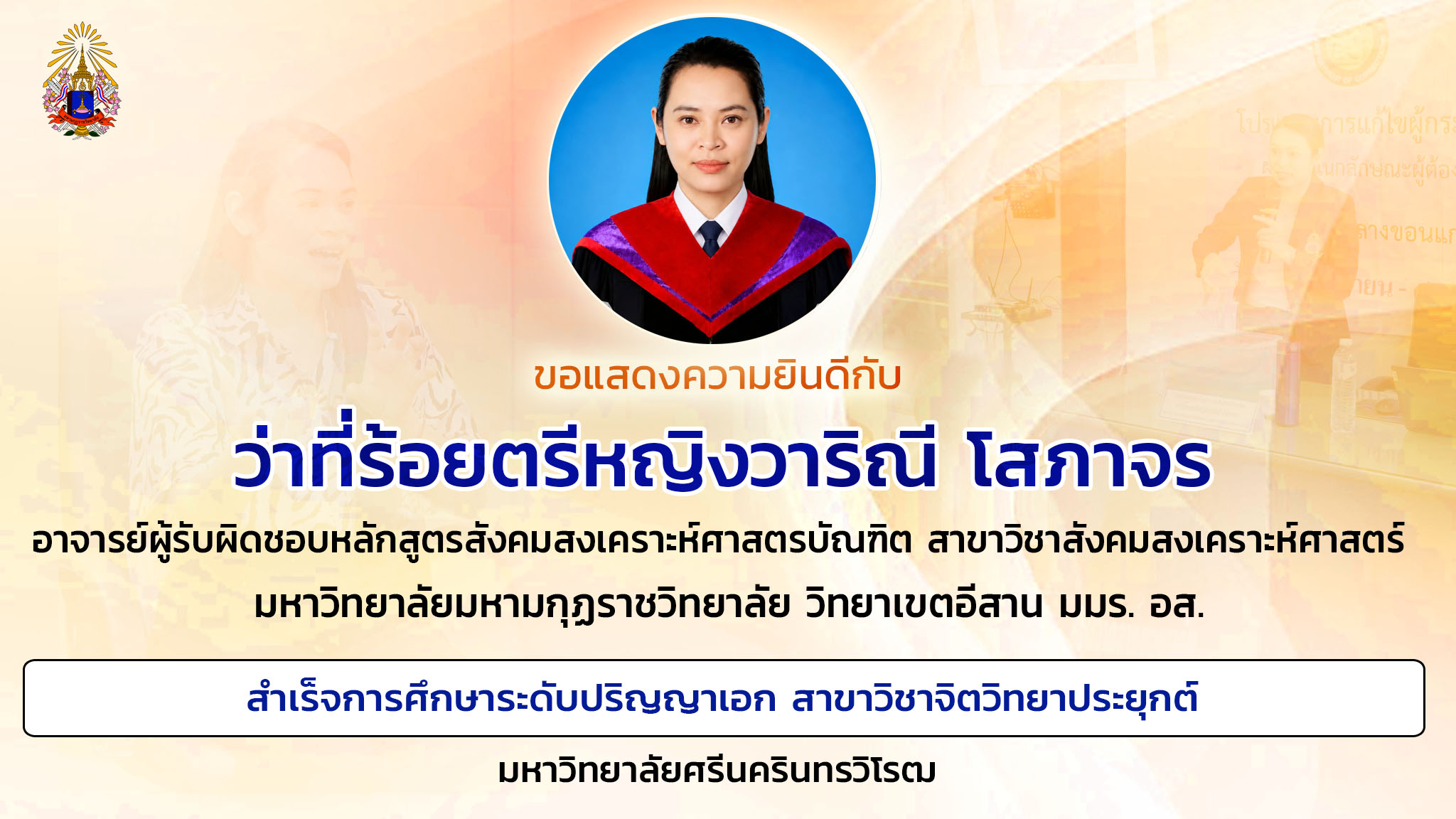
Congratulations to Acting Sub-Lieutenant Warinee Sophajorn
Congratulations to Acting Sub-Lieutenant Warinee Sophajorn, Core Faculty Member of…
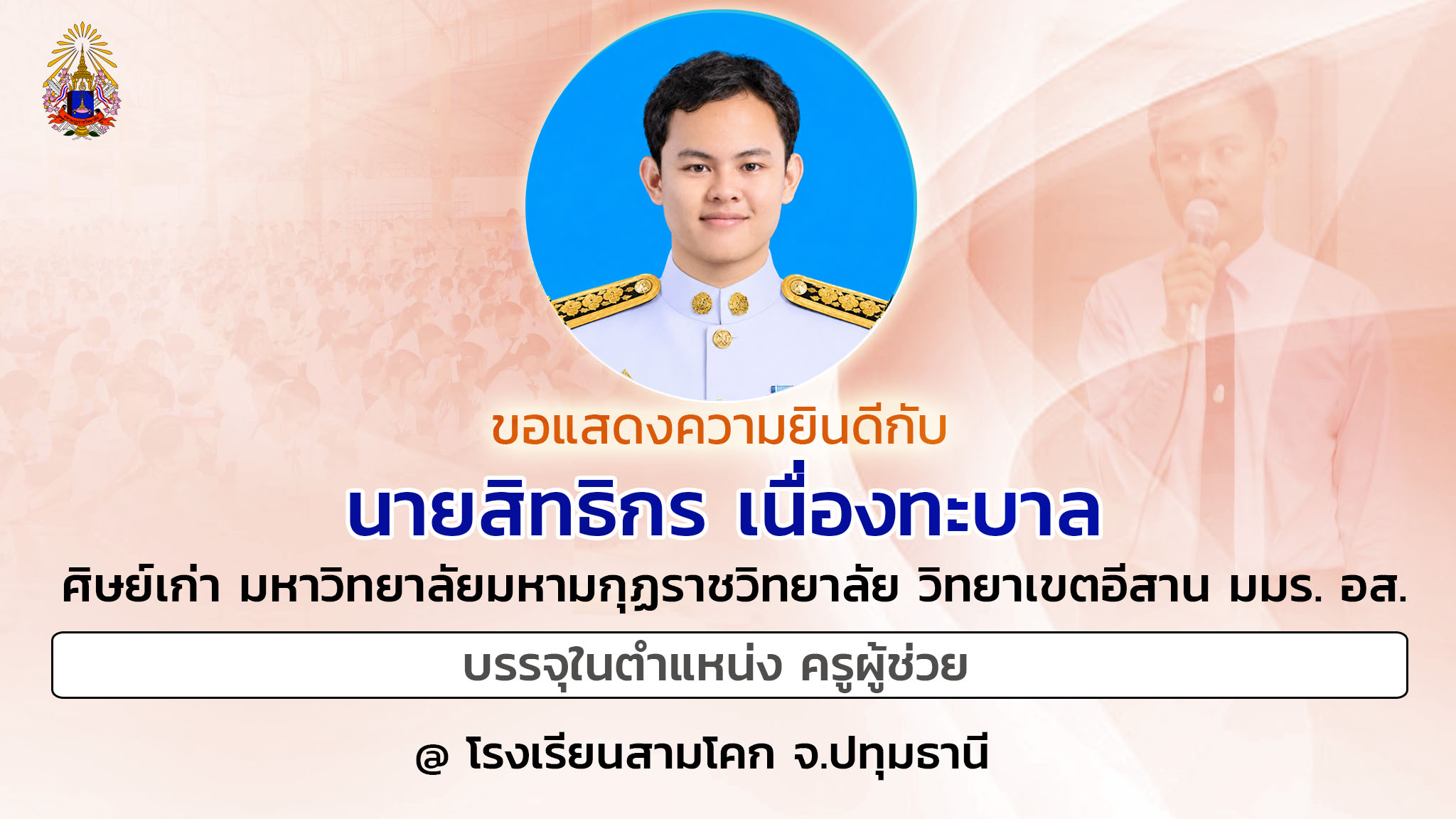
Congratulations to Mr. Sitthikorn Nuengthaban, an alumnus of MBU ISC
Congratulations to Mr. Sitthikorn Nuengthaban, an alumnus of Mahamakut Buddhist…
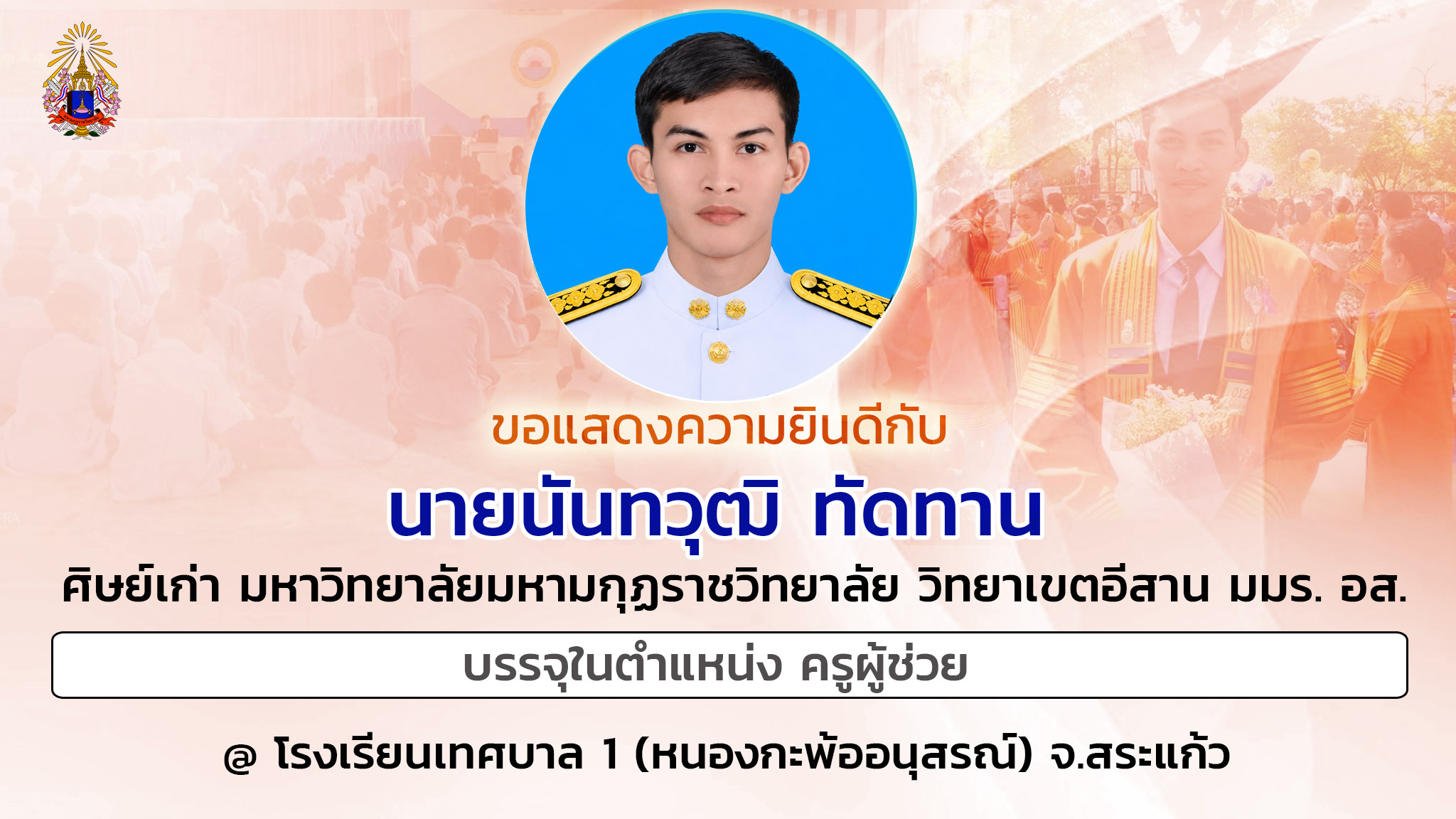
Congratulations to Mr. Nantawut Thatthan, an alumnus
Congratulations to Mr. Nantawut Thatthan, an alumnus of Mahamakut Buddhist…
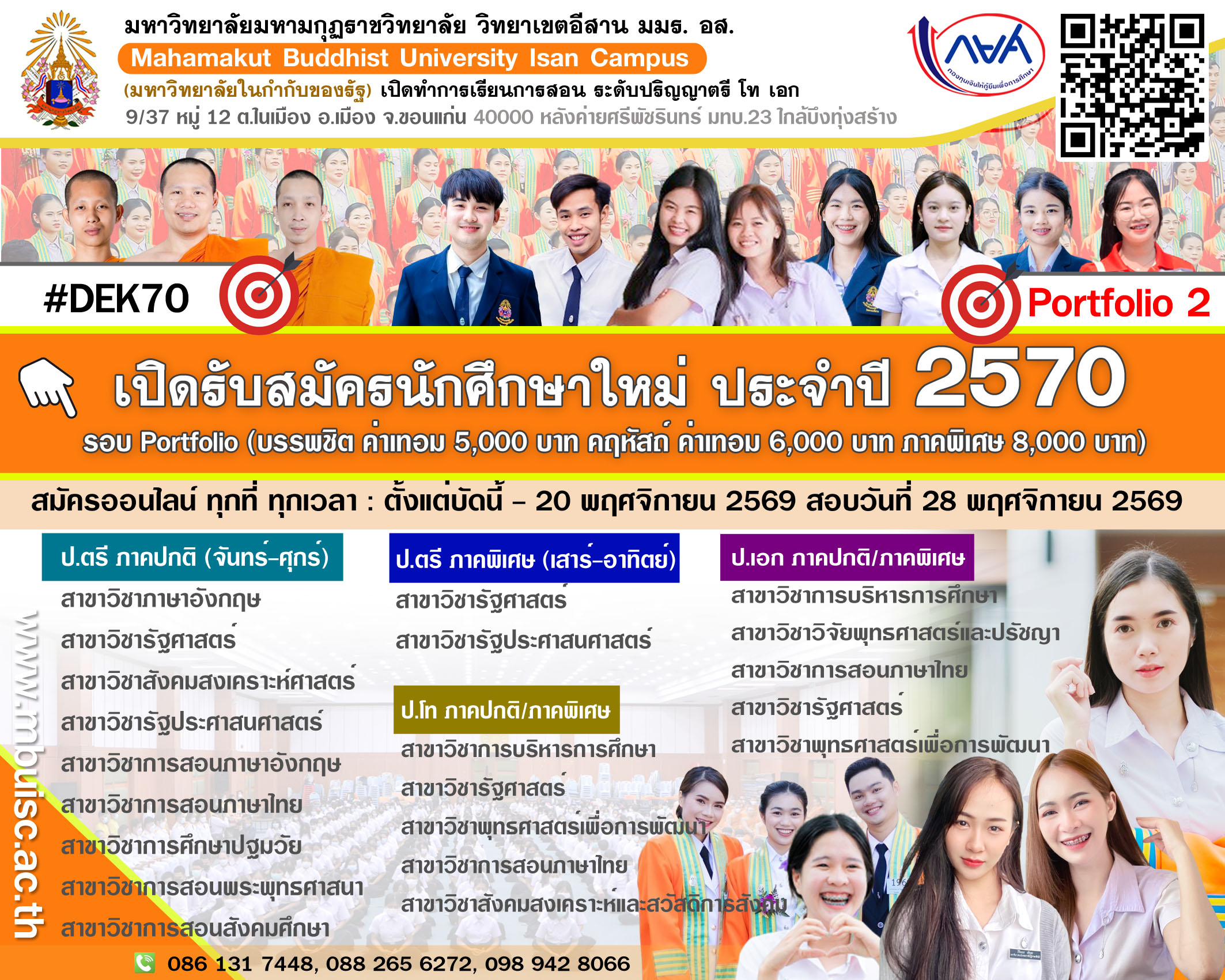
Announcement: List of Eligible Candidates for the Entrance Examination to Undergraduate Programs
Announcement: List of Eligible Candidates for the Entrance Examination to…
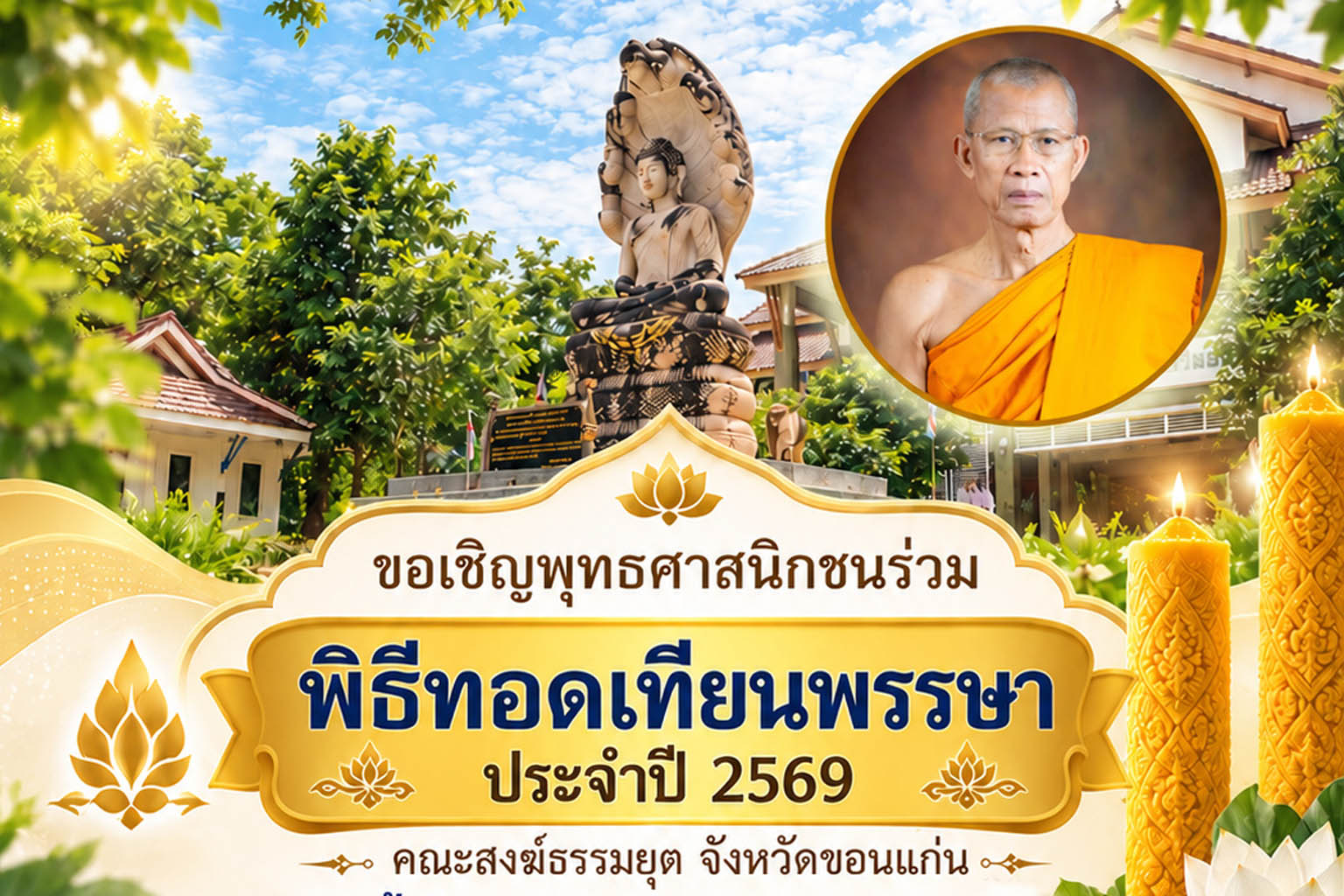
Buddhists Are Invited to Join the Buddhist Lent Candle Offering Ceremony 2026 of the Dhammayut Order, Khon Kaen Province
Buddhists are cordially invited to set up alms-giving booths, offer…
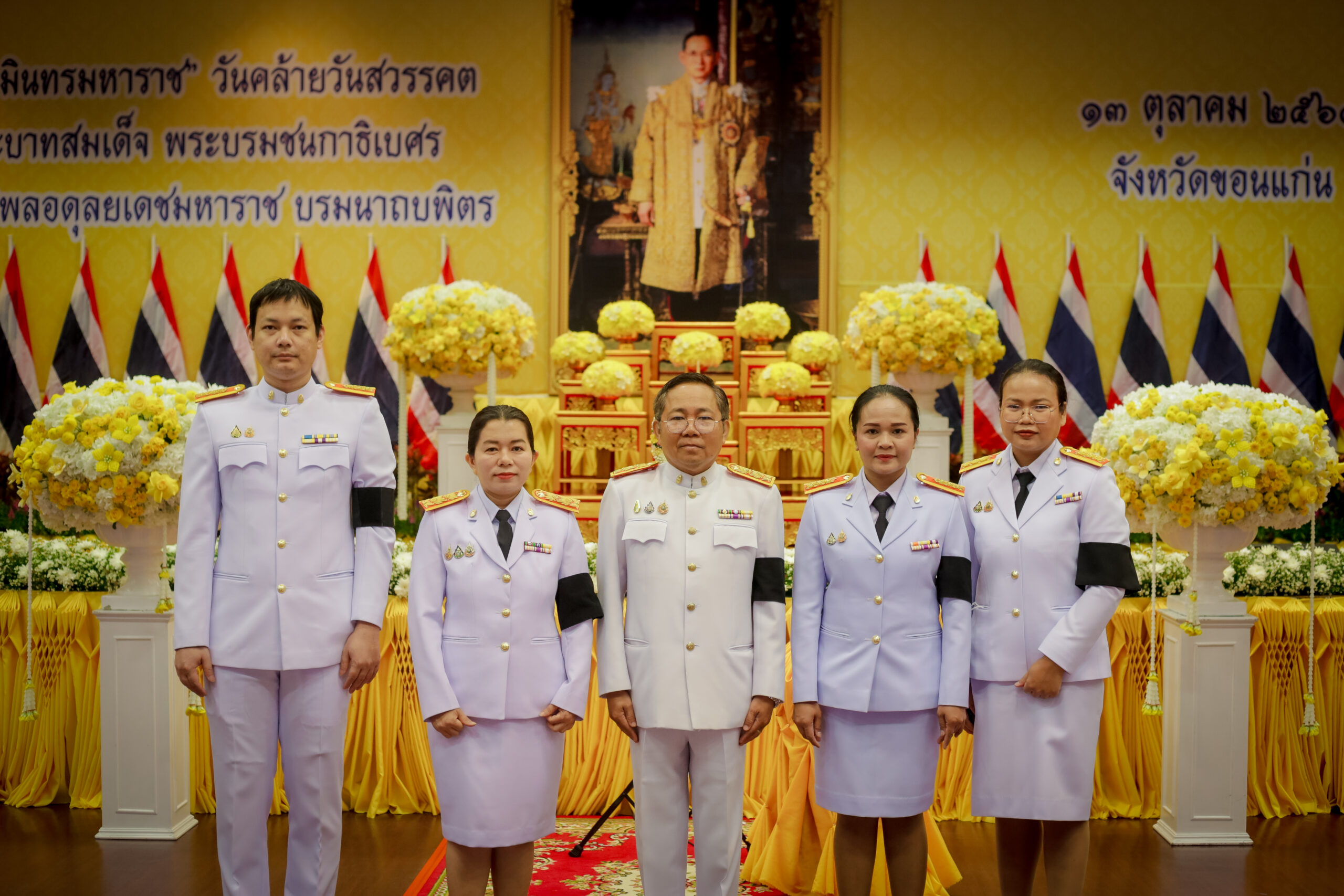
Joining the Ceremony on King Bhumibol Adulyadej the Great Memorial Day (Nawaminthra Maharat Day) 2026
Mahamakut Buddhist University, Isan Campus, represented by Dr. Akchatree Suksen,…
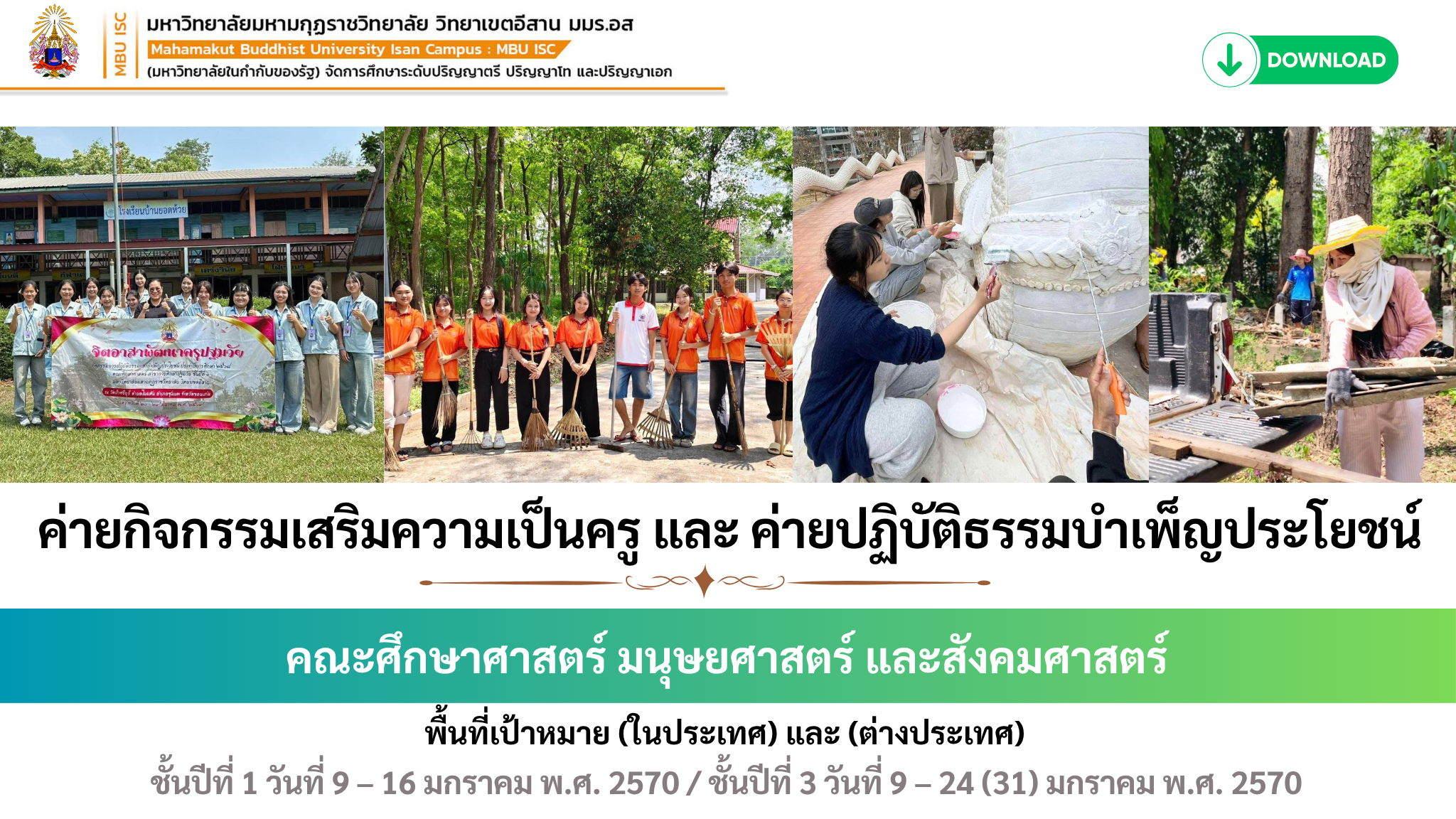
Teacher Professionalism Enhancement Camp and Dhamma Practice and Community Service Camp 2026, MBU Isan
Schedule of the Teacher Development Activities of the Faculty of…